Species Profile
Yellow Tang
Zebrasoma flavescens
Tangssemi-aggressive
Adult size
8″
Minimum tank
75 gal
Temperature
72–82°F
pH
8.1–8.4
Schooling
Solitary OK
Water level
mid
Grows from juvenile
Typically sold at ~2″ and reaches 8″ over ~2 years. Plan tank size for the adult, not the fish at purchase.Diet
Marine algae sheets (nori), seaweed, herbivore pellets
Notes
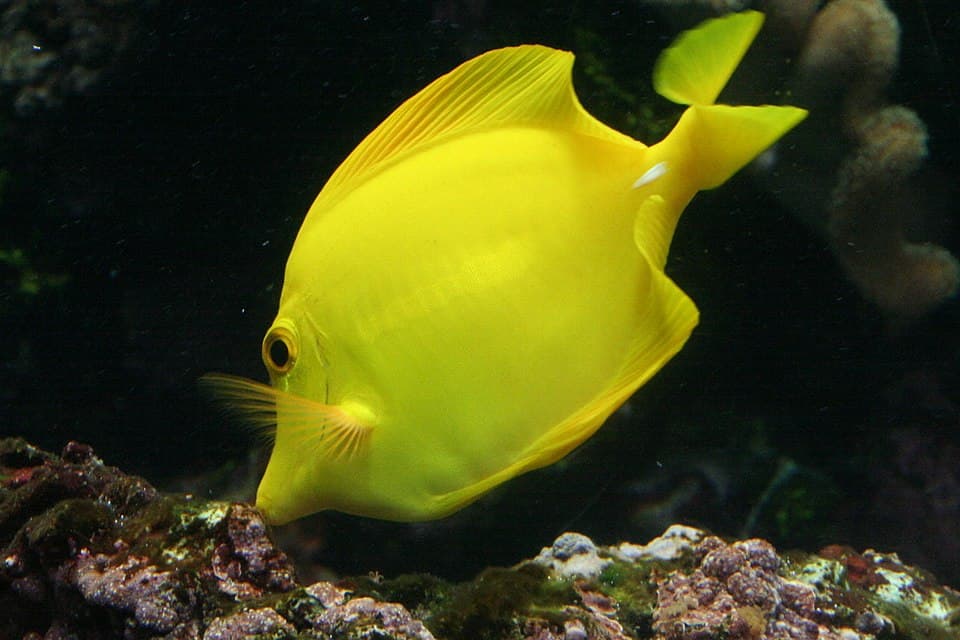
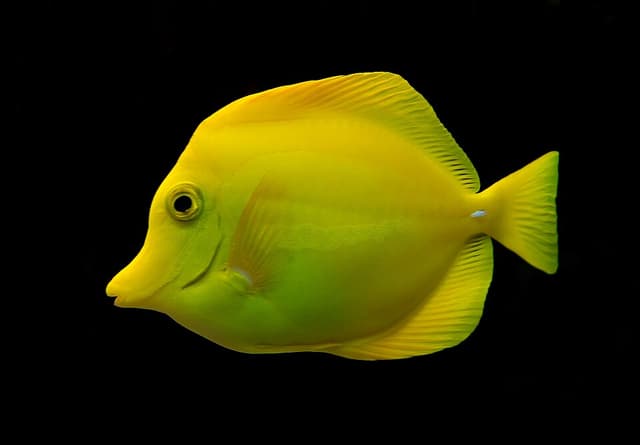
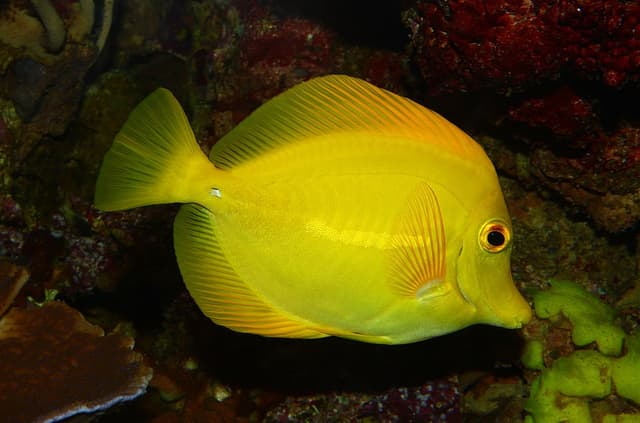
Vivid lemon-yellow Hawaiian surgeonfish. Needs daily algae and a tank long enough to swim — they're constant grazers. Two tangs in the same tank almost always end in violence; one per system.
Tank Setup
75gal absolute minimum, 6 feet of swimming length strongly preferred (the tank shape matters more than volume — yellow tangs need to swim laps, not just have water). Mature reef tank with established aquascape, live rock for grazing biofilm, stable parameters at 78°F + 1.024–1.026 SG + 8.1–8.4 pH. Strong flow (30× tank turnover) replicates Hawaiian current. Bright lighting drives the algae growth they constantly graze on. Buy CAPTIVE-BRED — Hawaii has restricted wild collection and bred specimens are now widely available, healthier, and more ethical.
Behavior
Constant grazer — yellow tangs spend ~80% of waking hours scraping algae off rockwork. Solitary in captivity (will fight other tangs viciously). Personality varies wildly: some are bullies that harass tankmates, others ignore everything. Famously prone to 'ich vacations' — symptoms come and go with stress. The scalpel-like spines at the base of the tail are actual weapons; tangs lock onto rivals or aggressors with them. Handle with caution during net captures.
Breeding
Captive-breeding was first achieved in 2015 (Oceanic Institute, Hawaii) and remains rare. Tangs spawn in groups in the wild during the new moon. The first commercially-bred yellow tangs are from Biota Aquaculture and similar facilities — buy these when available. Home breeding is essentially impossible due to the pelagic larval requirements (35+ days at sea on copepods).
Health
Ich-prone — really, the most ich-prone marine fish in the trade. Quarantine new arrivals 30 days minimum. UV sterilizers, copper-treated quarantine tanks, and a stress-free display setup are the standard prevention. HLLE (head and lateral line erosion) from poor diet — feed nori sheets and herbivore pellets daily. Bullying-related injuries are common; isolate aggressive individuals.
Frequently Asked
Can I keep two yellow tangs together?
Almost never. In tanks under 180 gallons they fight to the death. Even in large public-aquarium-sized systems, multi-tang stocking requires adding them simultaneously as juveniles and aquascaping for territorial breaks. The compatibility checker flags this as critical — for good reason.
Is the yellow tang reef-safe?
Yes. They don't nip corals, eat invertebrates, or interfere with reef stocking. They DO graze algae aggressively, which helps with nuisance algae but means a sparse-algae tank needs daily nori supplementation.
What size tank does a yellow tang really need?
75gal is the absolute floor. 90–125gal is comfortable. Tank LENGTH matters more than volume — a 75gal long (4 feet) beats a 90gal cube. The compatibility checker's tank-length rule warns when you have a tang in a tank shorter than 32 inches.
Why are yellow tangs more expensive than they used to be?
Hawaiian wild collection was restricted in 2021 after population declines. Captive-bred yellow tangs from facilities like Biota Aquaculture filled the gap but cost more to produce. The trade-off is healthier fish, no cyanide-collection damage, and a sustainable supply chain.
Photo: User:Strobilomyces / Wikimedia Commons · Source · CC-BY-SA-3.0