Species Profile
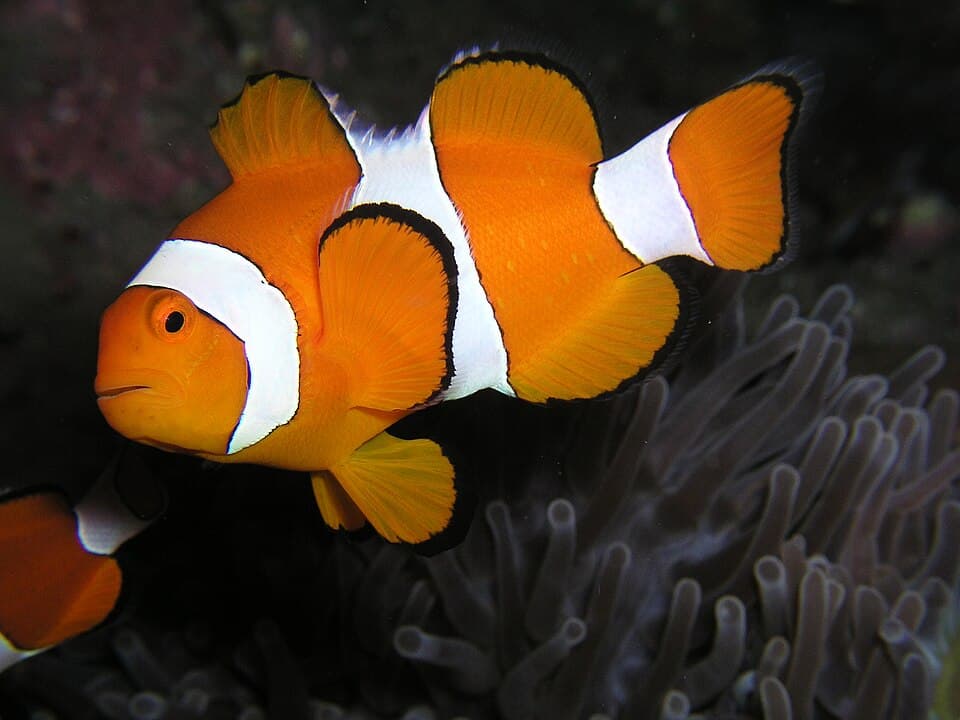
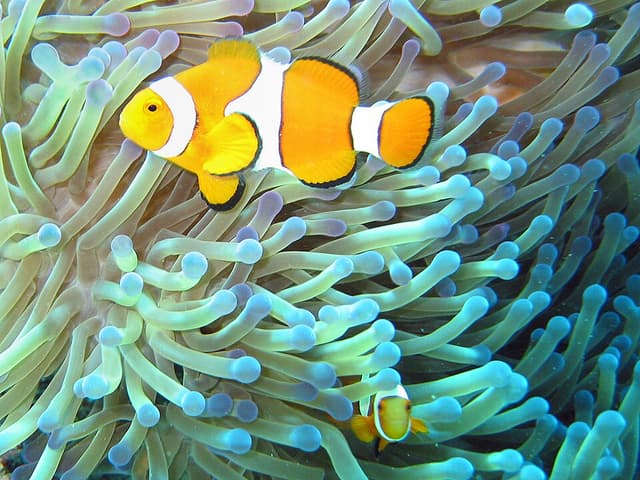
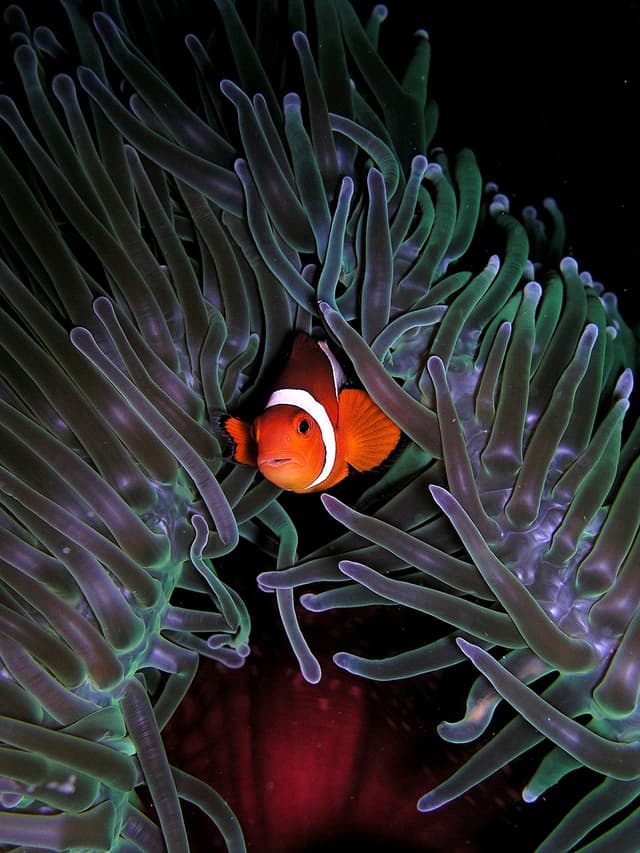
Ocellaris Clownfish
Amphiprion ocellaris
Also known as: False Percula, Common Clownfish, Nemo
Clownfishpeaceful
Adult size
3″
Minimum tank
20 gal
Temperature
75–82°F
pH
8.1–8.4
Schooling
Solitary OK
Water level
mid
Diet
Marine pellets, frozen mysis, brine shrimp
Notes
The iconic 'Nemo' clownfish. Captive-bred specimens are hardy and undemanding — a textbook beginner saltwater fish. Pairs bond for life; a single fish is fine. An anemone is optional, not required.
Tank Setup
Buy CAPTIVE-BRED — wild-caught Ocellaris are less hardy and arrive carrying parasites. A 20gal AIO (all-in-one) tank is the realistic minimum; 30gal makes maintenance easier. Stable salinity (1.024–1.026 SG), 78°F, 8.1–8.4 pH. Live rock provides territory and biological filtration. Strong flow (10×–20× turnover) keeps detritus suspended for the skimmer. Lighting is flexible — even basic LEDs work since you can keep clowns without anemones or corals.
Behavior
Pair-bonded, territorial within a small home range, energetic mid-water swimmers. In nature they host in anemones; in captivity many host in alternative objects (powerheads, frogspawn corals, even toilet brushes). All clowns are born male; the dominant fish in a pair becomes female (sequential hermaphrodites). A single fish in a tank stays male. Watch out for one fish bullying another to death — pairing two unknown clowns is risky.
Breeding
Captive-bred is the bedrock of the marine hobby. A bonded pair spawns every 10–14 days on a flat surface near their host (or near a powerhead). Eggs are golden orange, then darken to silver before hatching at night around day 8. Fry need rotifers for the first 7 days, then baby brine — copepod-rich green water (phytoplankton + rotifers) is the proven setup. Brood survival in beginner setups is low; this is a serious commitment.
Health
Common issues: marine ich/Cryptocaryon (white salt-like spots — quarantine new arrivals 30 days), velvet (gold dust — copper treatment), Brooklynella (peeling skin — formalin), bacterial infections from injury. Maintain stable salinity + temperature + pH — swings cause stress and disease. UV sterilizers reduce parasite loads. NEVER copper-treat a reef tank; quarantine in a hospital tank instead.
Frequently Asked
Do clownfish need an anemone?
No. The 'Nemo' association is iconic but completely optional. Anemones are demanding (high light, advanced care, can wander and sting corals). Captive-bred Ocellaris will happily live anemone-free and often choose alternative hosts like frogspawn corals, powerheads, or simply a corner of the tank.
Can I keep two Ocellaris together?
Yes — they're one of the few marine fish where you can buy two juveniles and they'll pair up into a male/female bond. The larger one becomes female, the smaller stays male. NEVER add a third — the pair will kill it. Captive-bred unrelated pairs from the same store usually work.
Is Ocellaris reef-safe?
Yes — they don't nip corals, eat invertebrates, or interfere with reef inhabitants. Safe with everything except hosting-incompatible anemones (Tube Anemone, Sebae) that may sting them.
Why is my Ocellaris swimming up and down in one spot?
Almost always 'hosting behavior' — they've selected a location (a corner, a powerhead, a coral) as their home and are claiming it. Completely normal. It often happens with new fish in the first week.
Photo: Nhobgood Nick Hobgood / Wikimedia Commons · Source · CC-BY-SA-3.0