Species Profile
Bristlenose Pleco
Ancistrus sp.
Also known as: Bushynose Pleco, BN Pleco
Plecospeaceful
Adult size
5″
Minimum tank
30 gal
Temperature
73–81°F
pH
6.5–7.5
Schooling
Solitary OK
Water level
bottom
Grows from juvenile
Typically sold at ~1.5″ and reaches 5″ over ~1 year. Plan tank size for the adult, not the fish at purchase.Diet
Algae wafers, veggies, driftwood
Notes
Stays manageable size unlike common plecos.
Tank Setup
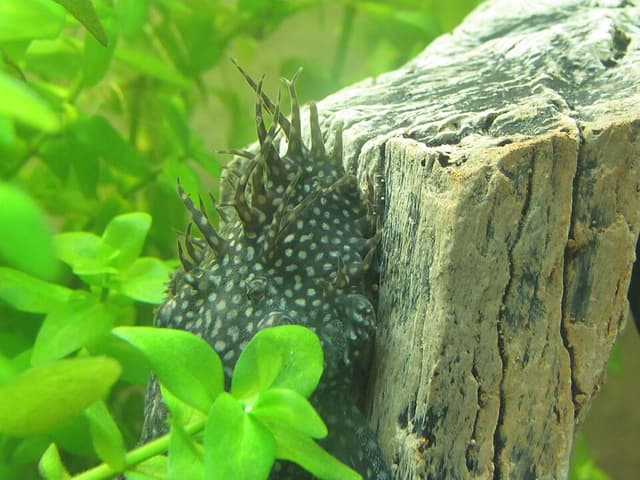
30gal minimum; bigger if you want a breeding pair. Driftwood is NON-NEGOTIABLE — bristlenose plecos rasp wood for digestion (they actually eat the cellulose) and develop digestive issues without it. Sand or smooth gravel substrate so their belly doesn't get scraped. Caves (terracotta pots on their side, PVC pipes, coconut shells) for hiding and breeding. Strong filtration but easy current. Heavy planting tolerated — they don't eat live plants like common plecos do.
Behavior
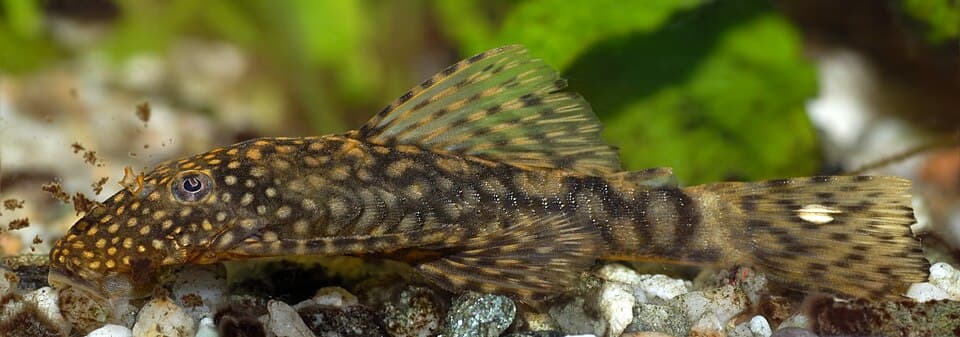
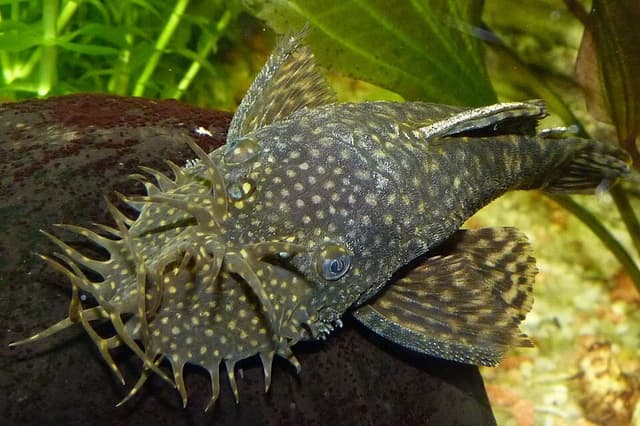
Nocturnal grazer that mostly hides during the day and emerges to scrape algae at night. Males develop dramatic 'whiskers' (bristles) on their face from ~6 months; females stay smooth or grow a sparse fringe. Adults pair-bond casually — a male will claim a cave and try to lure any female past it. Peaceful with everything that doesn't actively harass them. Will eat fallen fish food and dead tankmates.
Breeding
Among the easiest catfish to breed in captivity. Male claims a cave (terracotta pot or PVC tube), entices a female in, eggs are laid on the cave ceiling, female leaves. MALE GUARDS THE EGGS — fans them with his fins, eats the bad ones. Hatchlings emerge in 7–10 days with yolk sacs, free-swim after ~5 more days. Feed fry blanched zucchini, repashy gel, and crushed algae wafers. Cull or sell — a bonded pair can produce 100+ fry every few weeks.
Health
Common issues: ich (white spots — raise temp to 84°F for 10 days), bacterial fin rot (poor water quality), 'pleco-belly' bloat from no driftwood + only protein food (add wood + veggies immediately). Sensitive to copper — never use copper-based ich treatment. Slow eaters; if tankmates strip the food before the pleco gets it, target-feed sinking wafers at lights-out.
Frequently Asked
How big does a bristlenose pleco actually get?
5 inches as adults — much smaller than common plecos (18"+). That's why bristlenose are recommended for home tanks. Females stay slightly smaller (~4.5"); males reach a full 5" with thick bristles.
Does my bristlenose pleco need a buddy?
No, they're solitary. A single bristlenose is happy. Adding more works only in 50gal+ with multiple caves; otherwise males fight constantly over cave territory.
Why does my pleco have whiskers?
It's a male. The bristles are an evolved adaptation to look like fry — females are more likely to mate with males that 'have babies already' (a fry-mimic signal). Females either lack bristles entirely or grow a sparse fringe around the mouth.
Will a bristlenose pleco eat all my algae?
Sometimes. They prefer biofilm and soft green algae, less interested in black-beard or hair algae. A bristlenose alone often can't keep up with a heavy algae problem — fix the underlying cause (lighting, nutrients) first, the pleco is cleanup not solution.
Photo: André Karwath aka Aka / Wikimedia Commons · Source · CC-BY-SA-2.5